The Stormwater Superhero You’ve Never Heard Of
January 5, 2026
Fire Strategic Landscaping in San Diego County
February 17, 2026The Stormwater Superhero You’ve Never Heard Of
January 5, 2026Fire Strategic Landscaping in San Diego County
February 17, 2026World Wetlands Day:
Reviving Coastal Habitats in Southern California
Jon Green
February 2, 2026
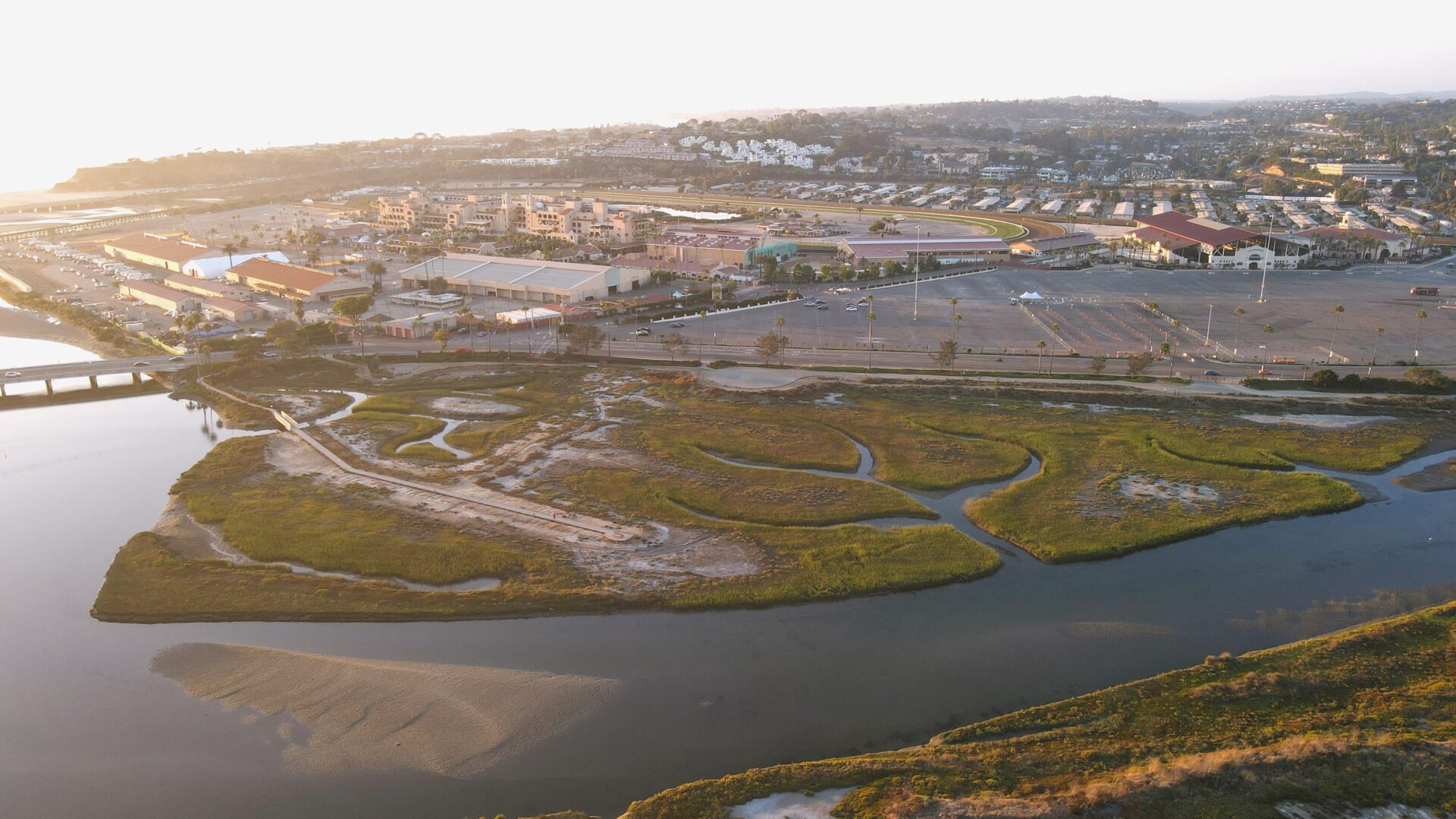
As coastal development pressures increase and climate concerns grow, restoring resilient coastal ecosystems has never been more important. At the forefront of ecological restoration in Southern California, Great Ecology is proud to be playing a leading role in the Del Mar Fairgrounds’ tidal marsh restoration at San Dieguito Lagoon in Del Mar, California – a project that exemplifies how science-based ecological consulting and innovative design can transform degraded sites into thriving wetland habitat that benefits wildlife, water quality, and local communities.
A Landscape in Need of Renewal
For decades, portions of the San Dieguito Lagoon were altered through development and historical use, leaving the soil highly saline and inhospitable to native plants. Recognizing the ecological potential of this land, regional partners and restoration specialists saw an opportunity: restore tidal marsh habitat that had been lost, and in doing so, support local biodiversity, improve ecosystem function, and reconnect people to coastal nature.
A Strategic Restoration Opportunity in Del Mar
Recognizing the ecological value of reconnecting this land to the coastal environment, regional partners – including the 22nd District Agricultural Association (DAA), which manages the adjacent Del Mar Fairgrounds – committed to converting the site back into functioning wetlands as part of broader environmental stewardship efforts that includes restoring over 13 acres of wetlands. This project not only helped the Fairgrounds fulfill mitigation and coastal permit requirements, it also aligned with its long-term environmental goals – such as investing in water quality improvement and habitat protection for threatened species.
Why Great Ecology’s Approach Matters
Great Ecology began supporting this restoration project as the ecological consultant to Marathon Construction during planning and implementation and now partners with Harris and Associates on post-implementation monitoring and management to support the long-term success of this sensitive coastal restoration site. Our team brings together ecological insight, technical expertise, and practical solutions to overcome significant challenges – including high soil salinity, which has historically stymied restoration efforts at this and nearby sites within the watershed.
Core Contributions from Great Ecology Include:
Soil Remediation and Salinity Management
The site had previously been cut off from natural tidal exchange, leaving the soils highly saline and inhospitable to native marsh vegetation. Great Ecology developed an innovative plan to reduce soil salinity with controlled freshwater irrigation and other ecological treatments, such as adaptive management emphasizing halophytic native plants. To date, soil conditions have improved sufficiently to support healthy establishment of salt marsh and upland transitional plants.
Native Seed Collection and Plant Installation
Locally appropriate native plant material was collected and propagated, ensuring that vegetation installed on site was well-adapted and genetically matched to the unique microhabitats of the San Dieguito Lagoon ecosystem.
Invasive Species Control and Monitoring
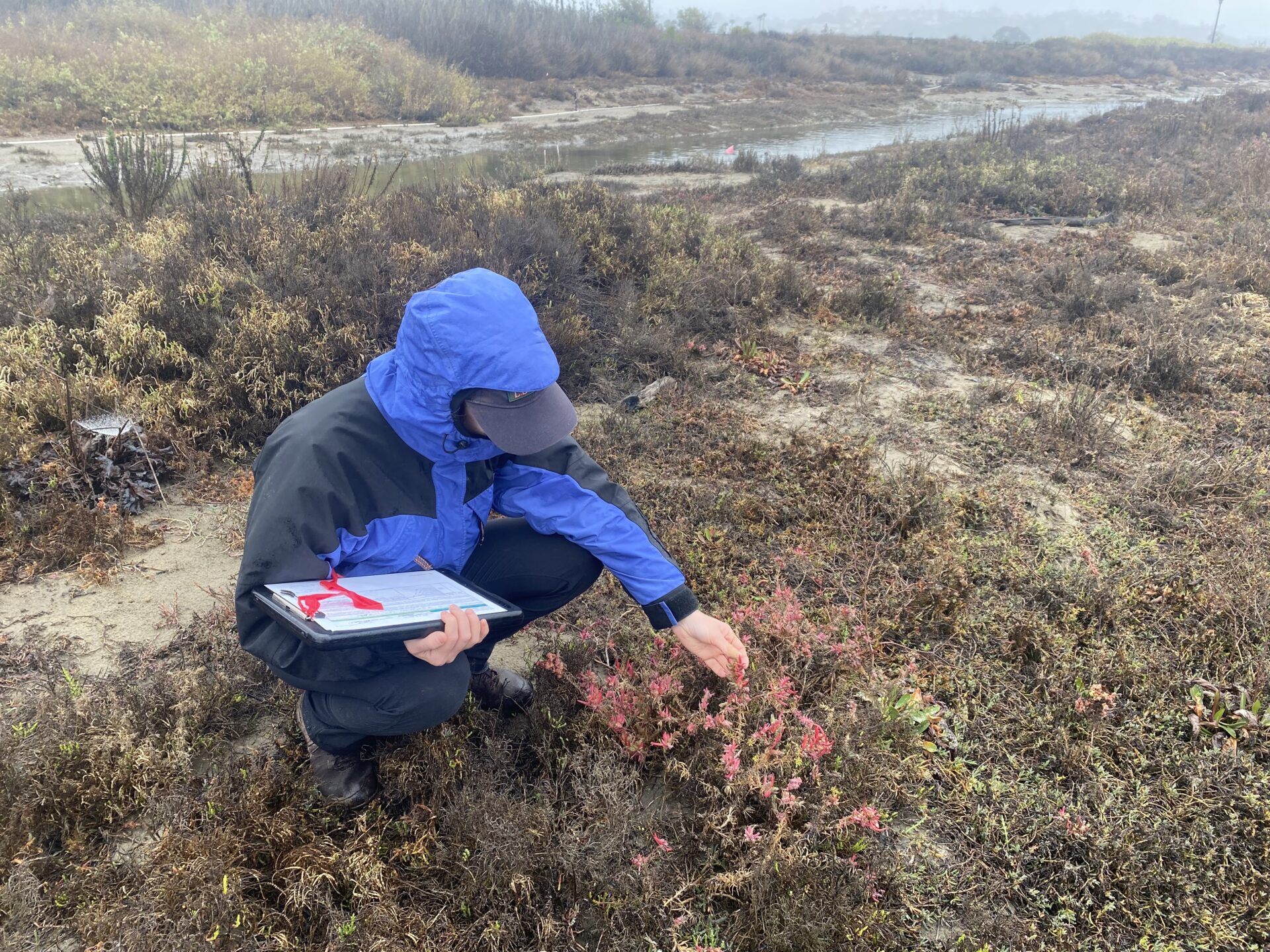
Removing non-native species and maintaining ongoing adaptive management and performance monitoring are essential to achieving long-term ecological success. Great Ecology continues to lead a multi-year monitoring program involving quarterly site visits and annual data collection efforts to assess wetland health, species composition, invasive pressure, and wildlife usage.
A Living Landscape Emerges: Restored Habitat with Lasting Benefits
Tidal marshes like those at San Dieguito Lagoon are ecological powerhouses. They serve as nurseries for fish, feeding grounds for migratory birds, natural filters for water quality, and buffers that help coastal communities adapt to sea level rise and storm impacts. Restoring them – especially in urbanized coastal regions like Southern California – is an investment in biodiversity, climate resilience, and community well-being.
This restoration site is now an integral part of the San Dieguito Lagoon ecosystem, a mosaic of tidal salt marsh, brackish wetland, and transitional upland habitats that support scores of avian, fish, and plant species indigenous to this watershed. Regional efforts like this one have restored wetland and upland transitional habitats and created public recreational opportunities like the Coast to Crest Trail system, which runs along this site, inviting visitors to experience the beauty of our native coastal habitats while encouraging outdoor recreation and immersion in nature.