

Great Ecology’s Poster Featured at World Design Congress 2025
November 20, 2025
World Wetlands Day: Reviving Coastal Habitats in Southern California
February 2, 2026Great Ecology’s Poster Featured at World Design Congress 2025
November 20, 2025World Wetlands Day: Reviving Coastal Habitats in Southern California
February 2, 2026The Stormwater Superhero
You've Never Heard Of
Victoria Apaldetti-Marquez
January 6, 2026
When rain clouds gather, most people take it as a chance to stay cozy indoors. A Qualified Storm Water Pollution Prevention Plan (SWPPP) Practitioner (QSP), however, sees it as their time to get to work. Their job is to ensure that stormwater leaving a construction site is as clean as it was when it arrived — a responsibility that quietly protects our creeks, rivers, and oceans.
Under the Construction General Permit (CGP), any project that disturbs one acre or more of soil must obtain permit coverage and take steps to prevent pollutants from leaving the site in stormwater runoff. To do this, each project must develop and implement a SWPPP, a required, site-specific document that identifies potential sources of stormwater pollution and outlines the Best Management Practices (BMPs) that will be used to control them.
BMPs can range from simple actions, like keeping trash cans covered and sweeping up debris, to more complex systems such as silt fences, fiber rolls, or large engineered sediment basins. These measures work together to keep pollutants out of stormwater before runoff leaves the site and enters nearby waterways.
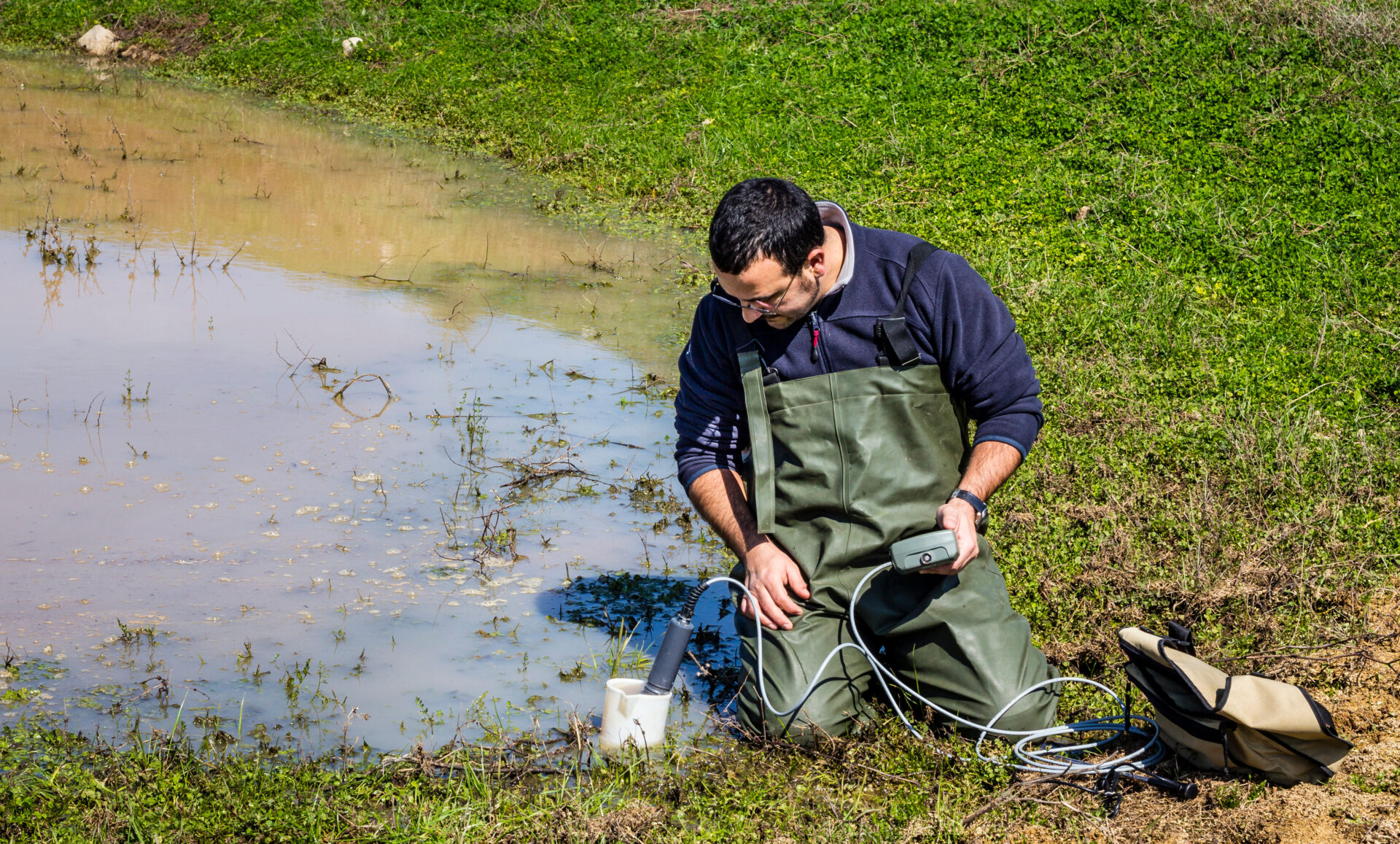
Water Quality Sampling in a wetland.
A Qualified SWPPP Developer (QSD) prepares and certifies the SWPPP before construction begins. The QSD evaluates site conditions, determines the project’s risk level (an assessment of how likely construction activities are to generate stormwater pollution), and designs a combination of erosion and sediment control measures based on the terrain, soil type, and surrounding environment. Their work ensures the SWPPP meets all CGP requirements and provides a roadmap for maintaining clean stormwater throughout construction.
Before the first drop of rain even falls, the QSP’s work begins. The QSP is responsible for implementing the project’s SWPPP in the field even before ground is broken. They verify that all the required erosion, sediment, and runoff controls identified in the SWPPP are properly installed and functional. Throughout each phase of construction, the QSP inspects the site to confirm that good housekeeping practices—everyday actions that keep the site clean and organized, such as proper waste management, material storage, and spill prevention—are being followed, and that erosion and sediment controls like fiber rolls, silt fences, and stabilized construction entrances are performing as intended.
When storms arrive, the QSP may monitor turbidity, pH, or other pollutants in runoff to ensure water quality remains within regulatory limits. Afterward, they document site conditions, identify any needed improvements, and recommend corrective actions to keep the project in compliance with state and federal standards.
While a QSP’s work may go unnoticed, their impact is far-reaching. Every well-managed construction site reduces sediment, concrete washout, and other pollutants that could otherwise flow into waterways. Muddy runoff might not seem like a big deal, but sediment can smother fish habitats, block sunlight needed by aquatic plants, and make drinking water harder to treat. Even small amounts of sediment can cloud water for miles and disrupt aquatic life, and that’s only one pollutant. When you consider that stormwater can also carry oil, metals, trash, paint, and other chemicals from construction materials, compounding risks to ecosystems and to the rivers and beaches we rely on for recreation and public health.
So, the next time you’re cozied up inside with a cup of tea during a storm or see clear runoff leaving a construction site, take a moment to thank the QSPs out there. While most of us are staying dry, they’re some of the many stormwater superheroes working behind the scenes to keep our waterways clean.
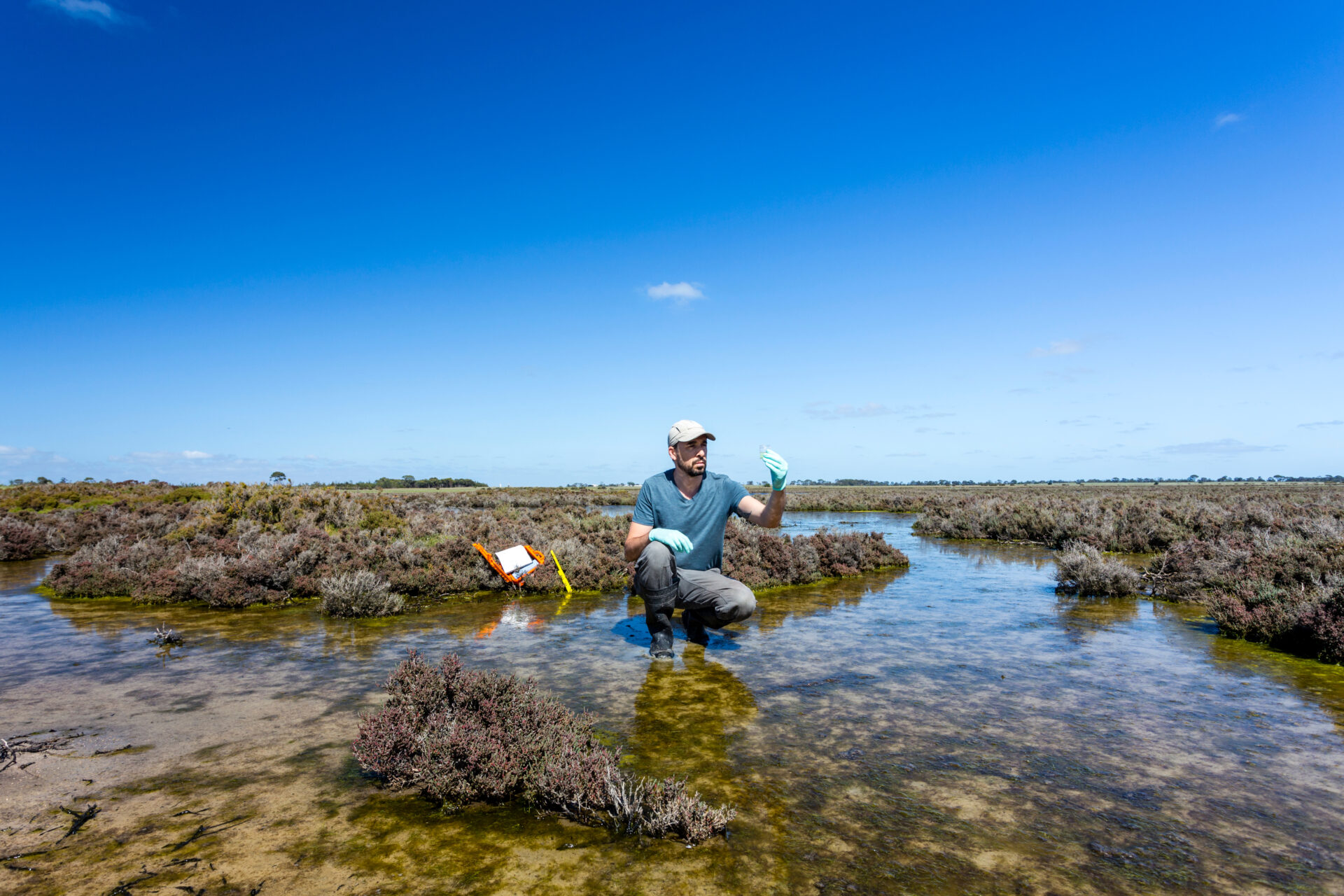
Water Quality Sampling in a wetland.