

World Wetlands Day: Reviving Coastal Habitats in Southern California
February 2, 2026
Coastal Erosion PEM Pilot Project Shows Positive Results
February 27, 2026World Wetlands Day: Reviving Coastal Habitats in Southern California
February 2, 2026Coastal Erosion PEM Pilot Project Shows Positive Results
February 27, 2026Fire Strategic Landscaping in San Diego County: Protecting Your Home & Community
February 19, 2026
Great Ecology provides a suite of fire resilient landscape services, ranging from community wildfire protection plans, brush management plans to long-term wildfire planning for HOAs, private homeowners, businesses, and utilities. Our specialists, including ecologists, scientists, planners and landscape architects, collaborate on projects to ensure long term community and site viability.
This blog is part of our Fire Resilient Landscapes blog series so stay tuned for additional content exploring fire and similar climate change driven impacts.
In a region where wildfires have become an increasingly common threat, fire strategic landscaping isn't just about aesthetics—it's about survival. For San Diego County residents, understanding how to create fire-resistant surroundings can mean the difference between a home that withstands a wildfire and one that succumbs to it. This overview will walk you through essential landscaping practices that create defensible space to protect your property while complying with local regulations.
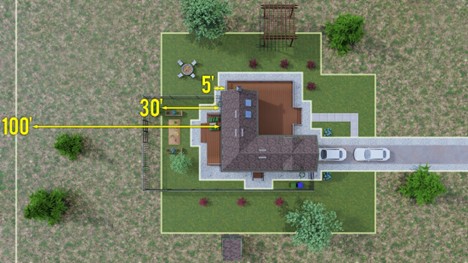
Defensible Space Zones should include maintained areas within 100 feet of the home or to the property line, whichever is closer. (Source: Cal Fire, www.fire.ca.gov/dspace)
Home Hardening
Home hardening refers to the comprehensive approach of preparing the buildings on your property to resist wildfire damage through the use of appropriate building materials and preventative construction techniques or retrofits. This strategy addresses how your home interacts with the surrounding environment during a wildfire and reduces the susceptibility of the structure to ignite from drifting embers or nearby sparks. This approach can be applied to both new construction and the retrofitting of older homes. Some examples of home hardening techniques include fine mesh screening for vents and soffits, boxing in eaves, and replacing windows and doors with double-pane tempered glass. By implementing home hardening techniques, you create a property that's more resistant to flames and embers—which are the primary causes of home ignition during wildfires. Residents can complete a home hardening self-assessment to evaluate their property's vulnerabilities and identify improvement areas, which can help you understand specific modifications needed to enhance your home's fire resistance.
The Three Zones of Defensible Space
Defensible space is the strategic buffer zone you create between your home and the surrounding area. This space is crucial for slowing or stopping wildfire spread and protecting your property from embers, flames, and heat. It also provides firefighters with a safer area to defend your home. Well-maintained defensible space can mean the difference between emergency responders choosing to defend your home or moving on to neighboring properties with better defense.
Zone Zero: The Ember-Resistant Zone (0-5 feet)
The first five feet immediately surrounding your home is the most critical area for fire protection. In 2020, the California State Legislature passed Assembly Bill 3074 (AB3074) to introduce "Zone Zero" as a mandatory five-foot ember-resistant zone around homes in high and very high fire hazard severity zones.
Why it matters: The majority of homes lost to wildfire are ignited by flying embers that can travel miles ahead of active wildfires. By creating an ember-resistant zone, you can significantly reduce your home's vulnerability.
Implementation timeline:
-
AB 3074 became law on January 1, 2021
-
Implementation for existing structures begins on January 1, 2026
-
Enforcement for all structures within the “very high” severity zones begins on February 1, 2027
What to do in Zone Zero:
-
Use hardscape materials like gravel, pavers, or concrete
-
Avoid using combustible bark or mulch
-
Remove all dead and dying plants, weeds, and debris from your roof, gutters, deck, porch, stairways, and under any areas of your home
-
Remove branches within 10 feet of any chimney or stovepipe outlet
-
Limit combustible items on decks
-
Relocate firewood and lumber to Zone 2
-
Replace combustible fencing, gates, and arbors attached to the home with noncombustible alternatives
-
Consider relocating garbage containers, boats, RVs, and vehicles outside this zone
Zone 1: Lean, Clean, & Green (5-30 feet)
Zone 1 typically extends 30 feet from habitable structures toward flammable vegetation and occurs on the level portion of a property. In this area, you'll focus on reducing fuel loads while maintaining some vegetation. By creating a sparse mosaic of adequately spaced, well-maintained plantings, this zone can be landscaped with appropriate fire-resistant trees, plants, and groundcovers that are typically irrigated.
Why it matters: This zone creates a crucial buffer that reduces potential fuel for fires, rate of fire spread, and limits fire intensity near your home.
What to do in Zone 1:
-
Maintain regularly by thinning and pruning trees and plants
-
Control weeds and maintain irrigation systems
-
Keep plants primarily low-growing (less than 4 feet in height), low-fuel, and fire-resistant
-
Cut back portions of trees within 10 feet of structures or chimney outlets
-
Remove dead wood from trees adjacent to buildings and trim back any overhanging limbs
-
Keep roofs and rain gutters free of leaves, needles, or other dead vegetation
-
Create vertical and horizontal separation between trees, shrubs, and items that could catch fire
-
No habitable structures are permitted; new construction must be non-combustible with a minimum 1-hour fire resistance rating
Zone 2: Reduced Fuel Zone (30-100 feet)
Zone 2 is the remaining 70 feet that extends beyond Zone 1, typically comprised of undisturbed vegetation, often on slopes, subject to sensitive biological resource protections.
Why it matters: California law requires 100 feet of defensible space. This extended zone further reduces the potential for high-intensity fires approaching your property and allows firefighters safer access to your property to defend the home in the event of wildfire.
What to do in Zone 2:
-
Remove dead wood and invasive species from within the brush management zone to reduce fuel load.
-
Thin plants over 2 feet tall by 50% in Zone 2, cutting them down to 6 inches or less.
-
Create a natural, staggered pattern.
-
Prioritize removal in this order: invasive non-natives, non-natives, flammable natives, native species, and regionally sensitive species only if necessary.
-
Prune remaining plants over 4 feet to form umbrella-shaped structures by removing lower branches and shortening upper growth. Vegetation under 4 feet should be cut back within 12 inches of the root crown.
-
Dispose of all cut material and dead wood by hauling to a landfill, or chip/mulch on-site and spread in Zone 2 to no more than 6 inches deep.
-
Maintain regularly with annual thinning and pruning, as vegetation will regrow over time.
San Diego's Brush Management Regulations
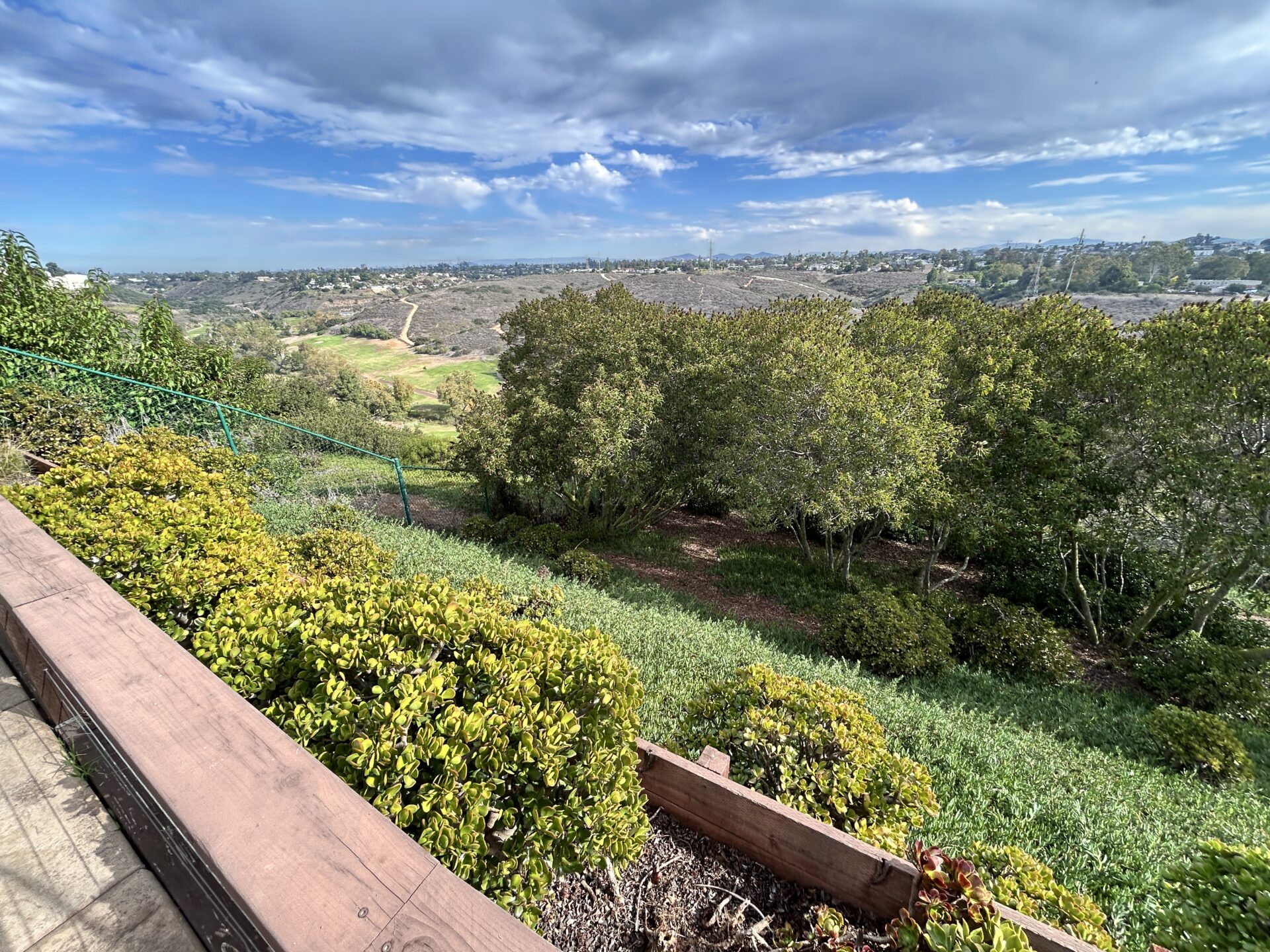
Brush management practices in the City of San Diego are regulated through the Land Development Code. Homeowners are responsible for conducting brush management on their property consistent with San Diego Municipal Code (SDMC) Section 142.0412 and with required protections for environmentally sensitive lands. Any property containing a habitable structure is required to provide 100 feet of brush management in two distinct zones: Zone 1 and Zone 2, though special requirements may apply for pre-1989 development.
Wildlife protection is an important consideration in brush management activities. To protect nesting birds and other sensitive species, the City of San Diego imposes seasonal restrictions on certain management activities. From March 1 through August 15, brush management is not allowed in coastal sage scrub, maritime succulent scrub, or coastal sage-chaparral habitats unless an exception is specifically granted. Even during the slightly extended period from February 1 through August 15, any clearing or pruning requires biological surveys to determine if active nests are present. These restrictions recognize the balance between fire safety and ecosystem preservation. By timing management activities outside of breeding season, with work performed between August 16 and January 31, homeowners can protect both their property and the native wildlife that makes San Diego County's natural areas so unique and valuable.
As of July 1, 2021, when Assembly Bill 38 became California Civil Code 1102.19(a), selling property located in high or very high-fire hazard severity zones requires documentation of a compliant defensible space inspection. The increasing frequency of wildfires has also made obtaining insurance coverage more difficult in many parts of California. Potential buyers should discuss fire insurance possibilities with an insurance agent, considering factors such as:
-
Property location in state or local fire zones
-
Fire hardening measures
-
Proof of compliance with defensible space laws
-
Insurer admission status in California
-
Scope of coverage available, including policies from the California Fair Plan
Most standard brush management activities conducted according to city guidelines don't require special permits. However, homeowners should be aware of several important exceptions to this general rule. Any development project requiring entitlement, grading, or building permits must include a formal Brush Management Plan and Program as part of the approval process. This ensures that fire safety considerations are integrated into new construction and significant property modifications from the beginning. Some alternative brush management approaches require specific authorization. For instance, using goats for vegetation management has become increasingly popular as an eco-friendly option, but this method requires a permit from the San Diego Fire-Rescue Department when used on private property. Similarly, goat grazing on City-owned open space requires approval from the Parks and Recreation Department Open Space Division.
Property owners whose defensible space needs to extend onto adjoining City-owned land face additional requirements. In these cases, a Right-of-Entry Permit is necessary, issued by the appropriate city department with authority over the property in question. This might be the Park and Recreation Department Open Space Division, the Water Department, Street Division, or Real Estate Assets. These permits ensure that brush management on public lands is conducted appropriately and with proper oversight. Lastly, San Diego has implemented a city-wide Proactive Brush Management Program that conducts door-to-door brush assessments of privately owned properties on canyon rims in very high hazard severity zones. Properties not within this program are assessed only on a complaint basis.